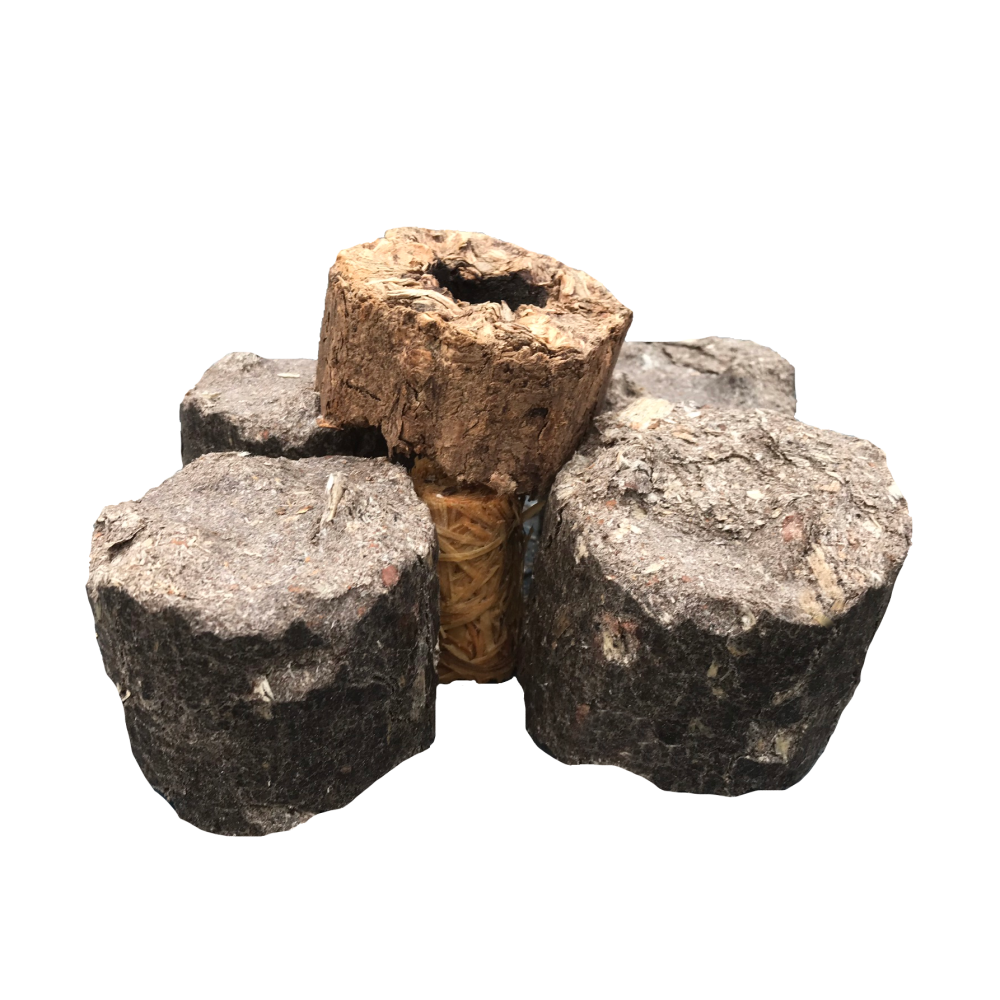
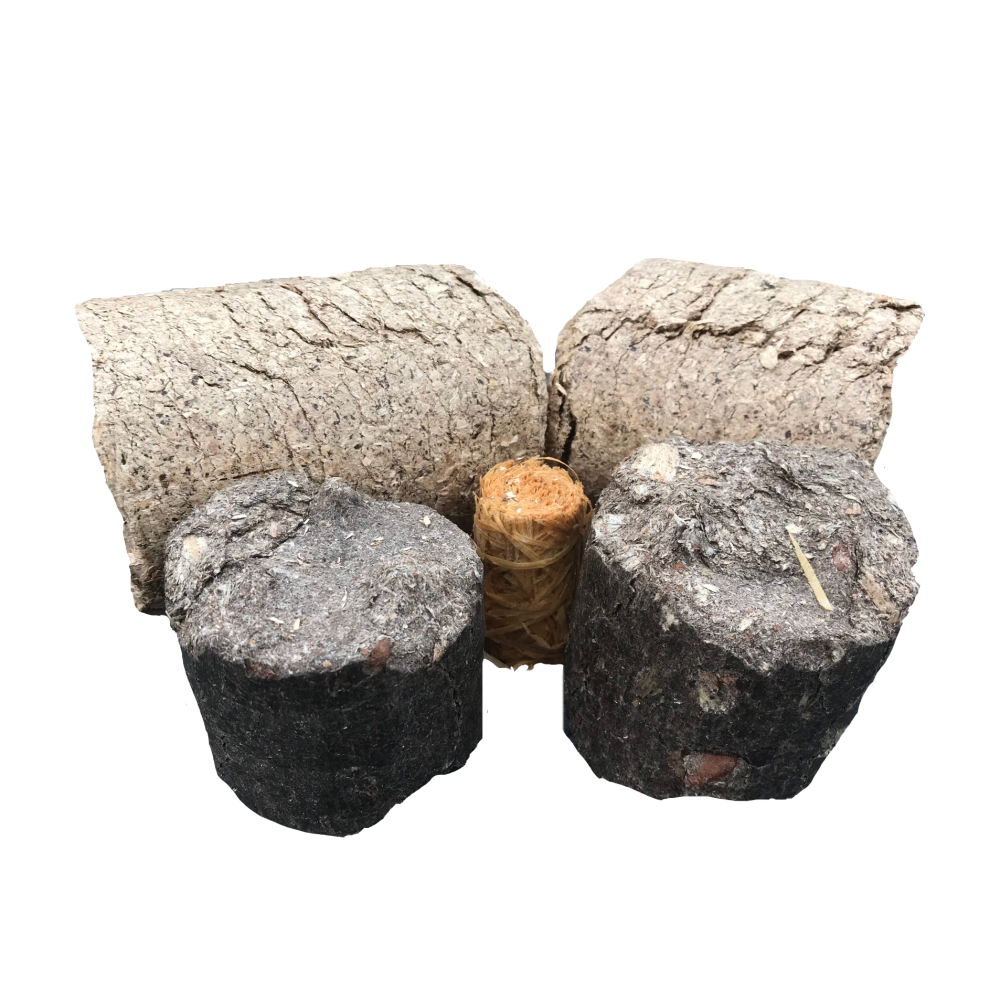
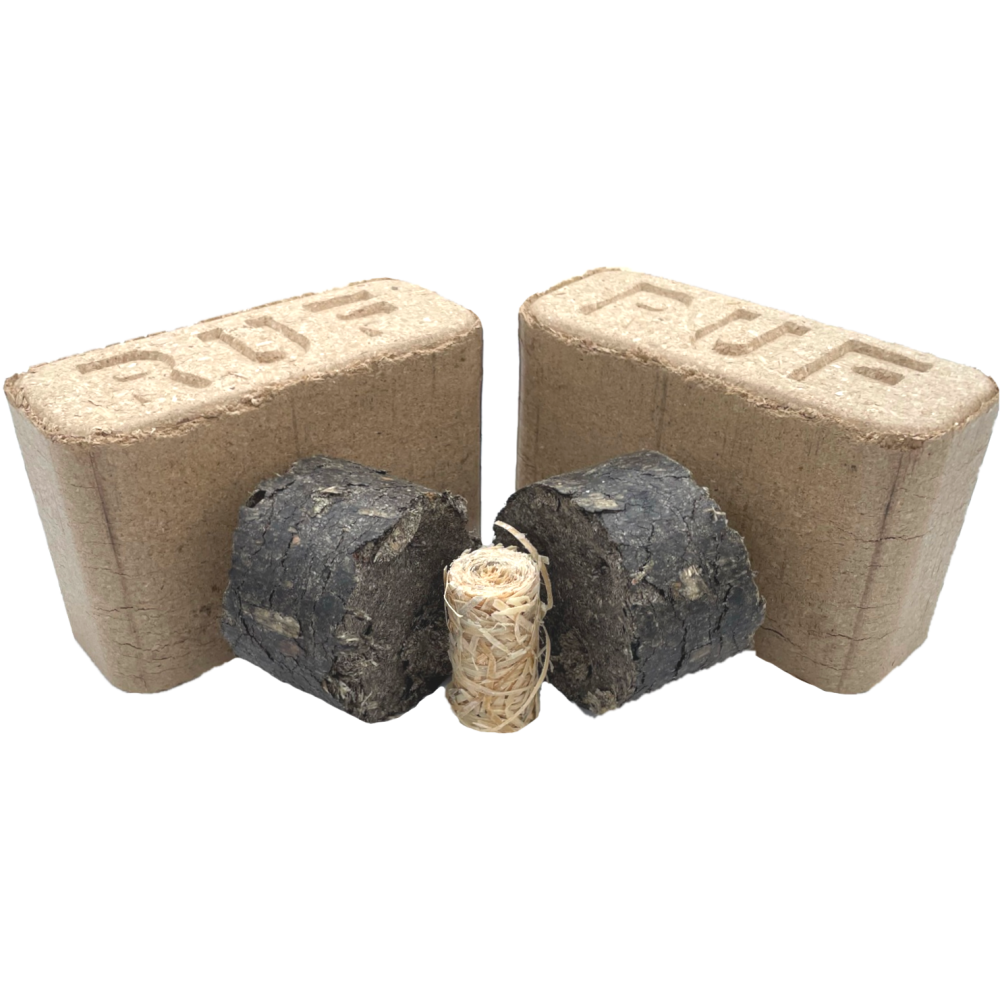
One of the most common questions we get! But honestly, firelighting is easy when you know how.
Lots of people worry about firelighting. We have a foolproof method that we’ve used for many years and it makes firelighting very simple.
Quick Instructions:
Step One
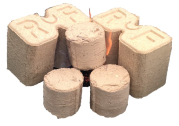
Start off with two of the RUF Oak briquettes in an open v shape, this will create a heart in your fire.
Step Two
Place a lit firelighter in the centre of the two RUF Oak. Just one will work – you don’t need lots!
Step Three
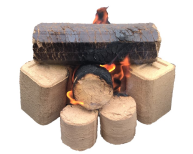
Break up one UK Hardwood Briquette into four sections and place these round the firelighter.
Open the air vents fully for the UK Hardwood to get well alight, but monitor the air flow so it doesn’t get out of control.
After half an hour or so, place half a Beech Nestro or similar on top of the well-lit UK Hardwood. Be careful to place it across the fire, so the end is not facing the glass, as it will expand slightly as it burns. This should last over an hour before needing more fuel adding. To maximise burn time, do not prod the fire with a poker.
What materials do I need?
There are lots of ways to successfully light your fire but the basic ingredients are:
Firelighters
Start by using a good quality, natural firelighter. We have a choice of two, both of which are excellent.
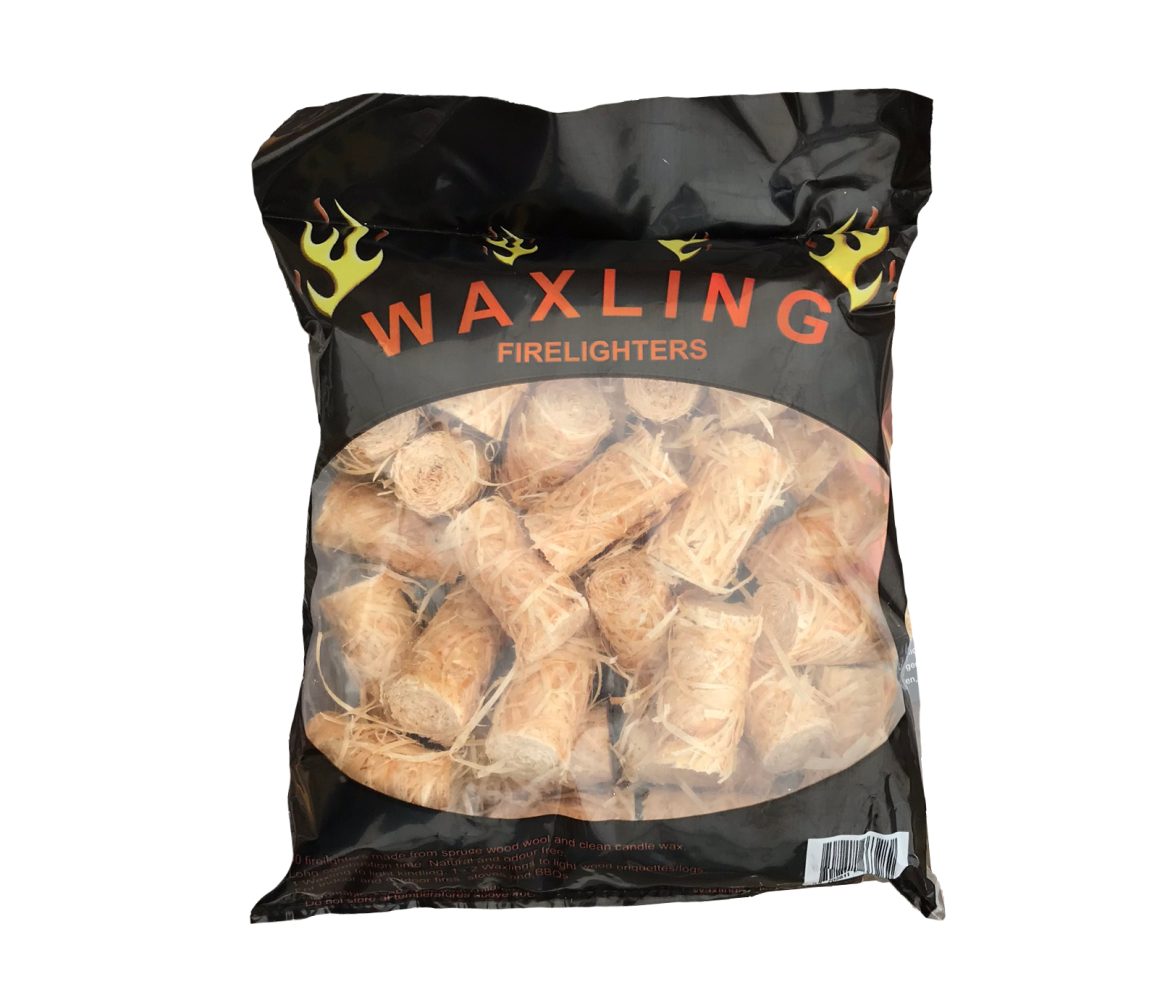

Waxlings are densely twisted wood wool coated in wax. Unlike other wood wool firelighters on the market, Waxlings are very dense and you only need one per fire. They burn for about 8-10 minutes, which is easily long enough to light a wood-based fire.
Our other best-selling firelighters are Dr Heat, which are made from chopped, dried miscanthus grass. The miscanthus grass is grown locally to the factory, and is one of the most sustainable crops around. The chopped miscanthus is then coated in wax from a local candle factory. The firelighters have a lovely light scent, but it’s not overpowering. We tend to recommend you don’t use them for cooking because of this though.
How do I know which firelighters to use?
Both Waxlings and Dr Heat burn for approximately 8-10 minutes so you won’t go wrong with either; it’s personal preference.
Pick Waxlings if you’re cooking on your fire or if unscented is important to you. They’re clean and attractive and very popular.
Pick Dr Heat if carbon neutral is key, and if you enjoy a gentle scented candle fragrance. They’re very easy to use and have a loyal following because of this.
Kindling
Kindling just needs to be an easy to light, quick burning fuel. Traditional kindlers are a popular choice but we tend to use UK Hardwood Briquettes. Why? They’re cheaper, longer-burning and easier to light than traditional sticks. All our kindling is Ready to Burn, so you know it’s high quality and safe to use.
Check out our Kindling Comparison Guide below.

Traditional Kindling Sticks
Our traditional kindling sticks are produced in Yorkshire. They are top quality, kiln-dried and cut to 20cm. A small handful is enough to start the fire, but they can burn quite quickly, which makes lighting very dense briquettes like Beech Nestro more difficult.
Pros: Simple to use and traditional
Cons: Very fast burning; sometimes too fast for allowing dense briquettes to catch
Verdict: Good but not as consistently reliable as UK Hardwood Briquettes or Hotmax cobs.

Hotmax
Hotmax are a popular small cob, ideal as a kindling alternative. They are longer-burning than traditional sticks and are easy to light off firelighters.
Pros: Easy to handle, light and store. Longer-burning than traditional kindling. Comes in either paper or plastic bags, making it very convenient.
Cons: More expensive than alternatives such as UK Hardwood Briquettes and can leave quite a lot of ash.
Verdict: An easy kindling that performs better than traditional kindling but can leave a bit more ash.

UK Hardwood Briquettes
A cheap, cheerful but incredibly effective kindling. This is our first choice when it comes to lighting our own fires.
Pros: Small 5kg packs are easy to handle. Can be broken into smaller pieces by hand. Easy to light and long burning, so creates an excellent ember bed. Very low price makes it excellent value as well.
Cons: Can be a little dusty to handle. Some variation in colour depending on the type of hardwood sawdust being processed.
Verdict: An unbeatable kindling. Cheap, easy to use and more effective than alternatives. What’s not to like?
Some Expert Firelighting tips:
- Arrange your firelighter and kindling so that they lightly touch but there is room for air to move through between them. This helps give the fire the oxygen it needs to breathe.
- The smaller the pieces of briquette, the easier they will light, but the faster they will burn
- Open the air flow vents fully when lighting your stove.
- You can use almost any combination of briquettes in the V pattern we suggest. Some ideas are below: