Subscribe!

Restricted Access Notice

Please make sure we can deliver your order!

Full Pallets (over 720kg) can no longer be delivered on a 7.5T vehicle.

If you require a small vehicle, please ensure that your order weighs no more than 720kg

If you're not sure, please call to chat with us or drop us an email to discuss your options.

Sustainable Scottish BBQ Charcoal


What Price Cheap Charcoal?

We stock Scottish BBQ Charcoal becuase we want to support local, ethical suppliers.

Did you know…

Charcoal is one of Europe’s top five products contributing towards global deforestation, along with beef, palm oil and soy.

Studies by The Earthworm Foundation show that much of the charcoal sold in Europe contains undeclared tropical hardwoods. This undocumented timber comes from virgin tropical forests. Hardwoods are slow-growing and are a central part of complex ecosytems. Their destruction has a huge impact on the biodiversity of these regions.
The UK imports around 85,000 tonnes of charcoal each year. Between 4-12 tonne of wood is required to produce 1 tonne of charcoal.

That’s a phenomenal rate of deforestation to provide us with cheap charcoal. The Earthworm Foundation also cites concerns about the use of charcoal to launder illegal timber harvesting and finance other illegal activities.

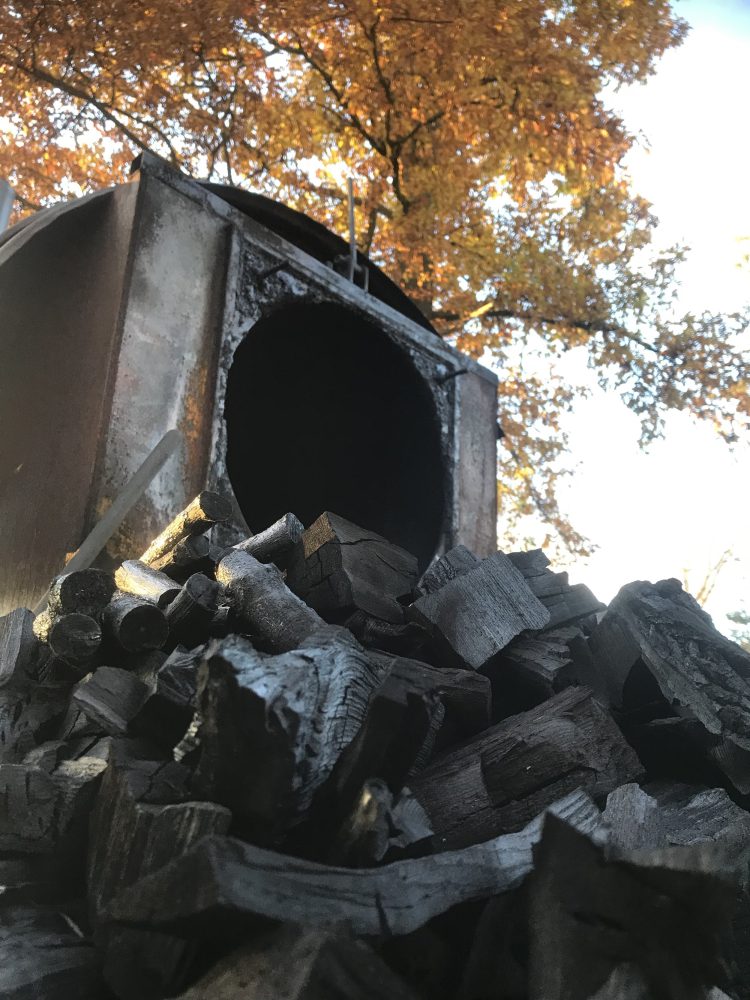
Our Scottish BBQ Charcoal is made by a community action group in Scotland, using sustainably managed wood. The wood is coppiced from local broadleaf woodlands. The charcoal is made using a retort kiln that resuses the gases produced through the burning process, making it the most environmentally-friendly and efficient way of making charcoal.

The whole process uses traditional skills and is done in small, sustainable batches, in a community. This means it’s not cheap but it is sustainable, made in Scotland and supports a valuable local community initiative.

By buying our Scottish BBQ Charcoal, you’re supporting a local producer, creating employment and building a local timber economy, maintaining a traditional method of production, and reducing your environmental impact. 

Your basket is currently empty.

Return to shop

Quick guide to choosing the best Wood Fuel for your stove and lifestyle.

Wood Fuel Co-operative
Scroll

*Break - We strongly recommend you break these briquettes in half (or less for very small stoves) because they do expand whilst burning and you don't want them to overfill the fire.
*Easy to light - We always use a Firelighter and Kindling Sticks to start our fires. Most briquettes are graded four stars to light because they are quite dense and require kindling.

Notes:

  • All stove and flue combinations tend to have different burning characteristics. Fuel that works well in my stove may not work so well in your stove, and vice-versa.
  • Most modern stoves are more efficient than most older stoves, meaning a modern quality stove will burn fuel more economically and generate more heat over a longer period.
  • Always try to burn fuel with a 'lick of flame'. Smouldering fuel to try to extend burn time is bad for your stove, flue and the environment due to unburned particulate matter in the smoke.
  • Be prepared to break briquettes into smaller sections to fit into your stove comfortably. Many briquettes do expand whilst burning and you don't want them to expand onto the glass.
  • The chart above indicates which briquettes are easy to break. Some are small enough so they don't need breaking. This makes for a cleaner environment around your stove.
  • All briquettes, except Everyday Value and Hotmax, benefit hugely from using kindling to light them. I suggest five kindling sticks will be sufficient, meaning a net should last 30 days.

This website uses cookies
This site uses cookies to enhance your browsing experience. We use necessary cookies to make sure that our website works. We’d also like to set analytics cookies that help us make improvements by measuring how you use the site. By clicking “Allow All”, you agree to the storing of cookies on your device to enhance site navigation, analyse site usage, and assist in our marketing efforts.
These cookies are required for basic functionalities such as accessing secure areas of the website, remembering previous actions and facilitating the proper display of the website. Necessary cookies are often exempt from requiring user consent as they do not collect personal data and are crucial for the website to perform its core functions.
A “preferences” cookie is used to remember user preferences and settings on a website. These cookies enhance the user experience by allowing the website to remember choices such as language preferences, font size, layout customization, and other similar settings. Preference cookies are not strictly necessary for the basic functioning of the website but contribute to a more personalised and convenient browsing experience for users.
A “statistics” cookie typically refers to cookies that are used to collect anonymous data about how visitors interact with a website. These cookies help website owners understand how users navigate their site, which pages are most frequently visited, how long users spend on each page, and similar metrics. The data collected by statistics cookies is aggregated and anonymized, meaning it does not contain personally identifiable information (PII).
Marketing cookies are used to track user behaviour across websites, allowing advertisers to deliver targeted advertisements based on the user’s interests and preferences. These cookies collect data such as browsing history and interactions with ads to create user profiles. While essential for effective online advertising, obtaining user consent is crucial to comply with privacy regulations.